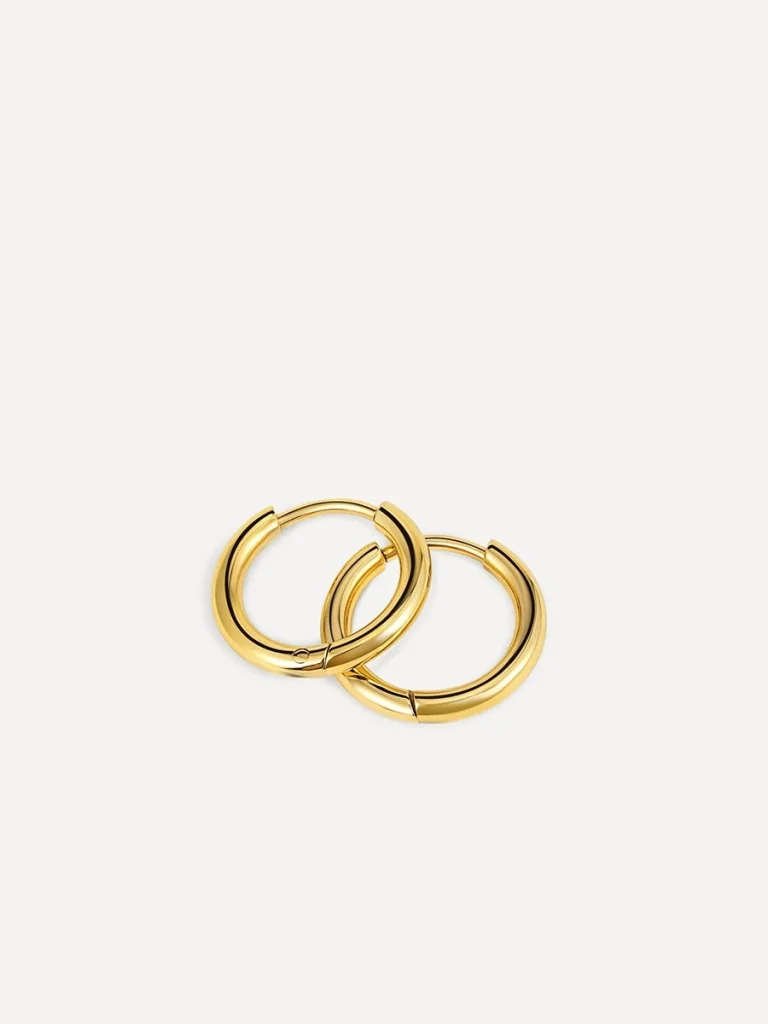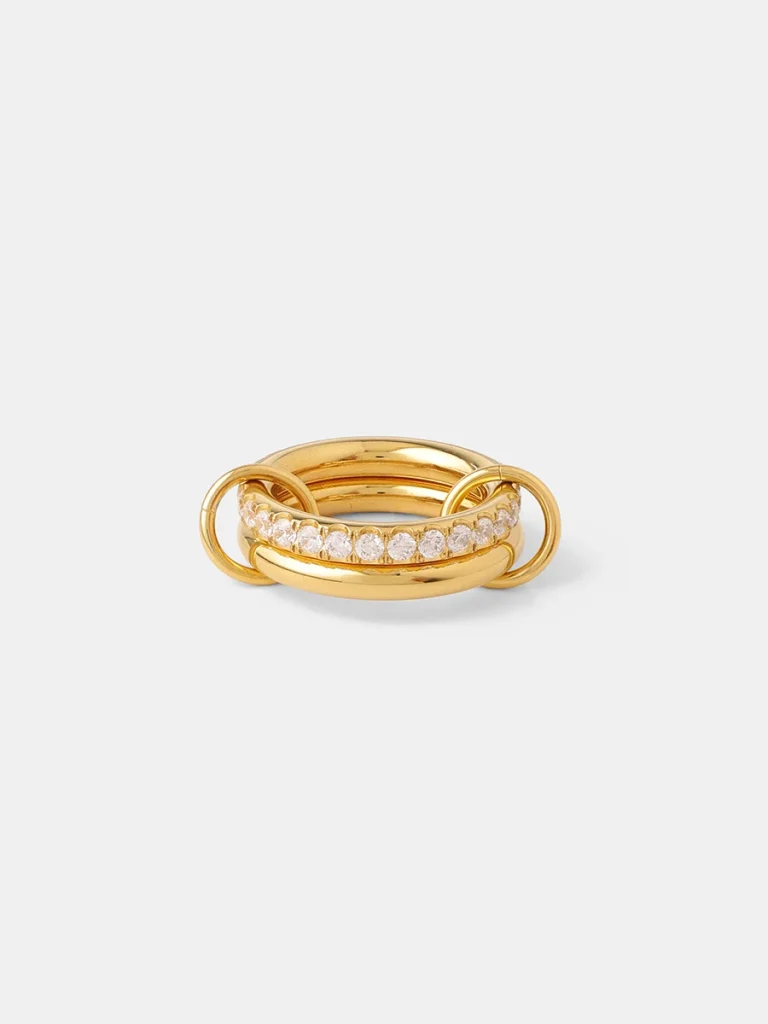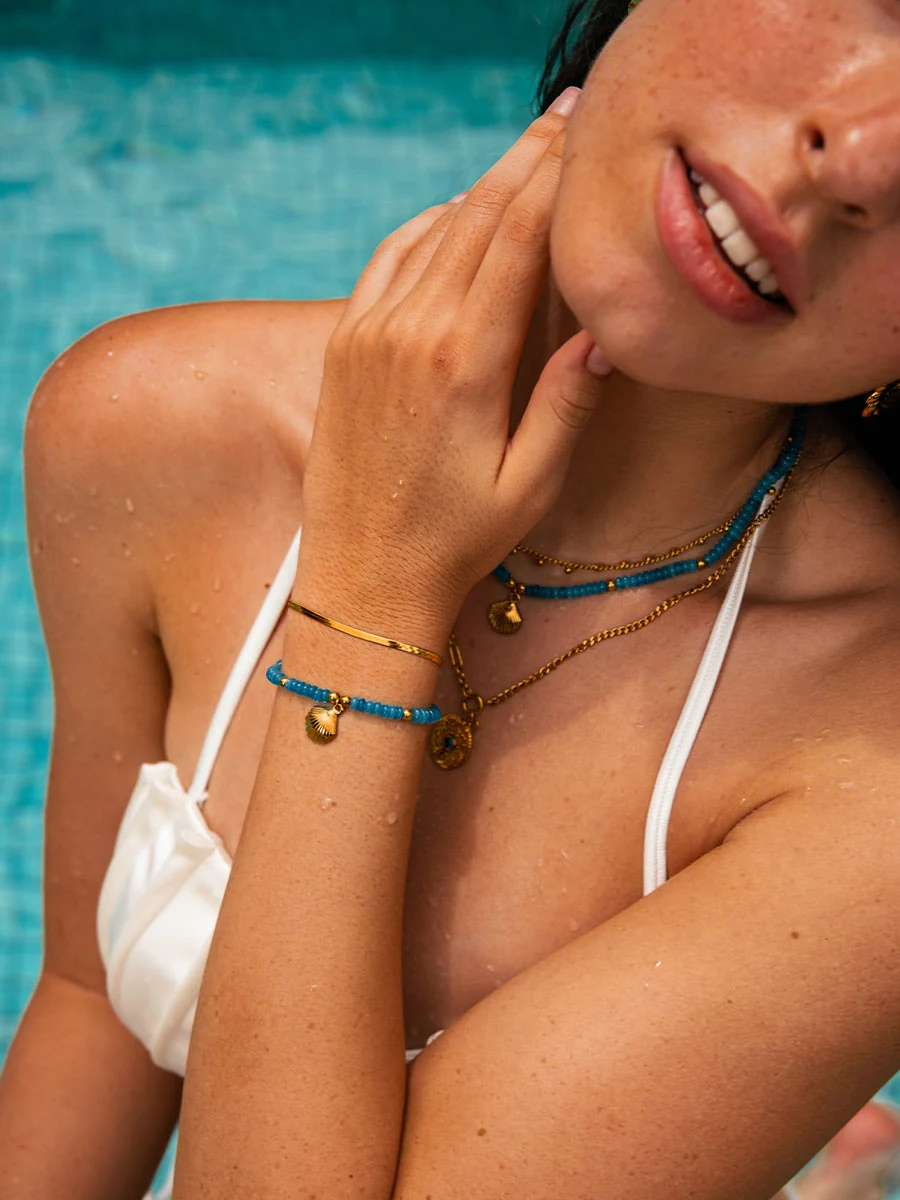
Begin with the complete piece
A necklace or bracelet can combine a metal surface, coating, clasp and delicate decorative elements. Water exposure affects the complete construction, so one material name should never stand in for the needs of the whole piece.
Treat a splash as a useful pause
If a piece gets wet during an ordinary day, identify what it is made from before reaching for a cleaner or deciding it needs a long soak. Where its instructions permit, remove residue gently and dry with a soft cloth. Check around clasps and attached details before putting the jewelry away. Our practical approach is to respond to the actual exposure and the piece’s condition, rather than assuming every contact with water means either damage or complete protection.
Before a swim
Make removal part of getting ready for the sea: put jewelry in a separate compartment before applying sunscreen or handling wet towels. This avoids guessing which coating, clasp or attached detail will tolerate salt water. Close small compartments carefully so rings and earrings cannot disappear among loose belongings.
At the pool
A pool brings more than water: repeated contact with chemicals, sunscreen and rough surfaces can complicate care. Taking jewelry off before swimming is a straightforward routine, especially for pearls and plated pieces. Choose a dry, protected storage place before entering the water instead of leaving loose pieces beside the pool.
Give pearls a separate routine
A pearl surface needs different handling from a plain metal band. Keep pearl necklaces, bracelets and earrings away from swimming water, direct perfume and vigorous polishing. After wear, use gentle handling and inspect the connections without tugging; a metal clasp does not make the entire piece equally resistant.
Build an easy habit for travel
Pack a small, separate place for jewelry so removal before the pool, exercise or a shower does not become an improvised decision. Keep pieces apart, let them dry appropriately before storage and retain their material descriptions for reference. These habits support the finish and fittings without relying on absolute claims that plating will never change or every piece can remain on indefinitely.
Consider the details. Keep what feels like you.