Begin with one clear line
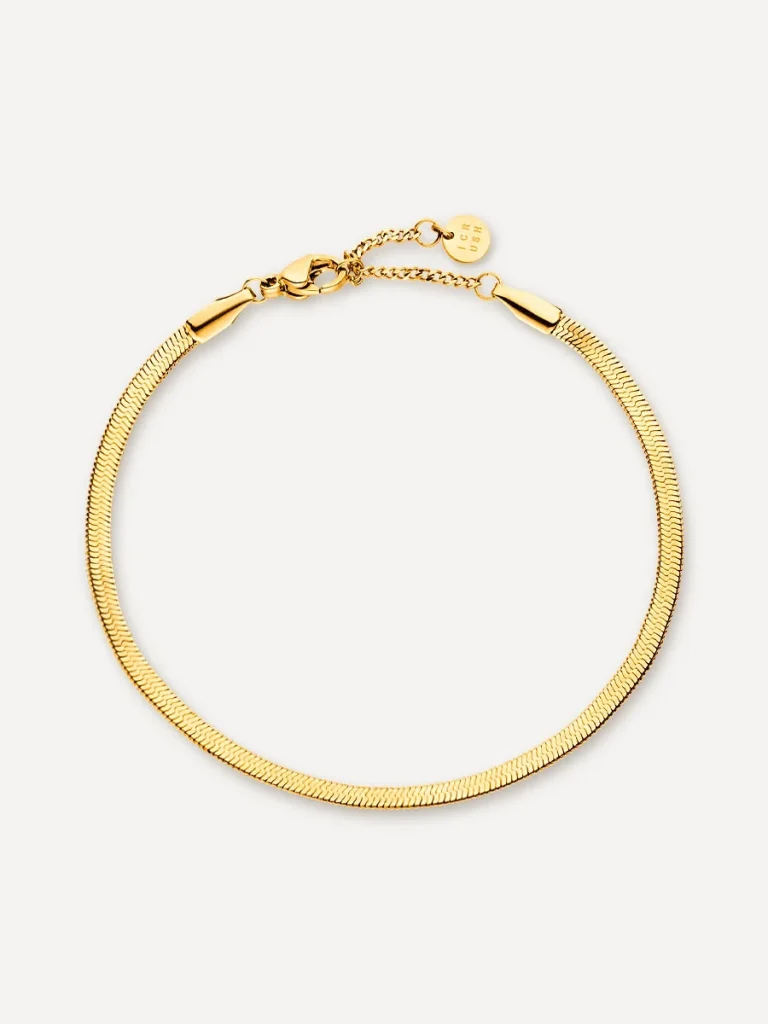
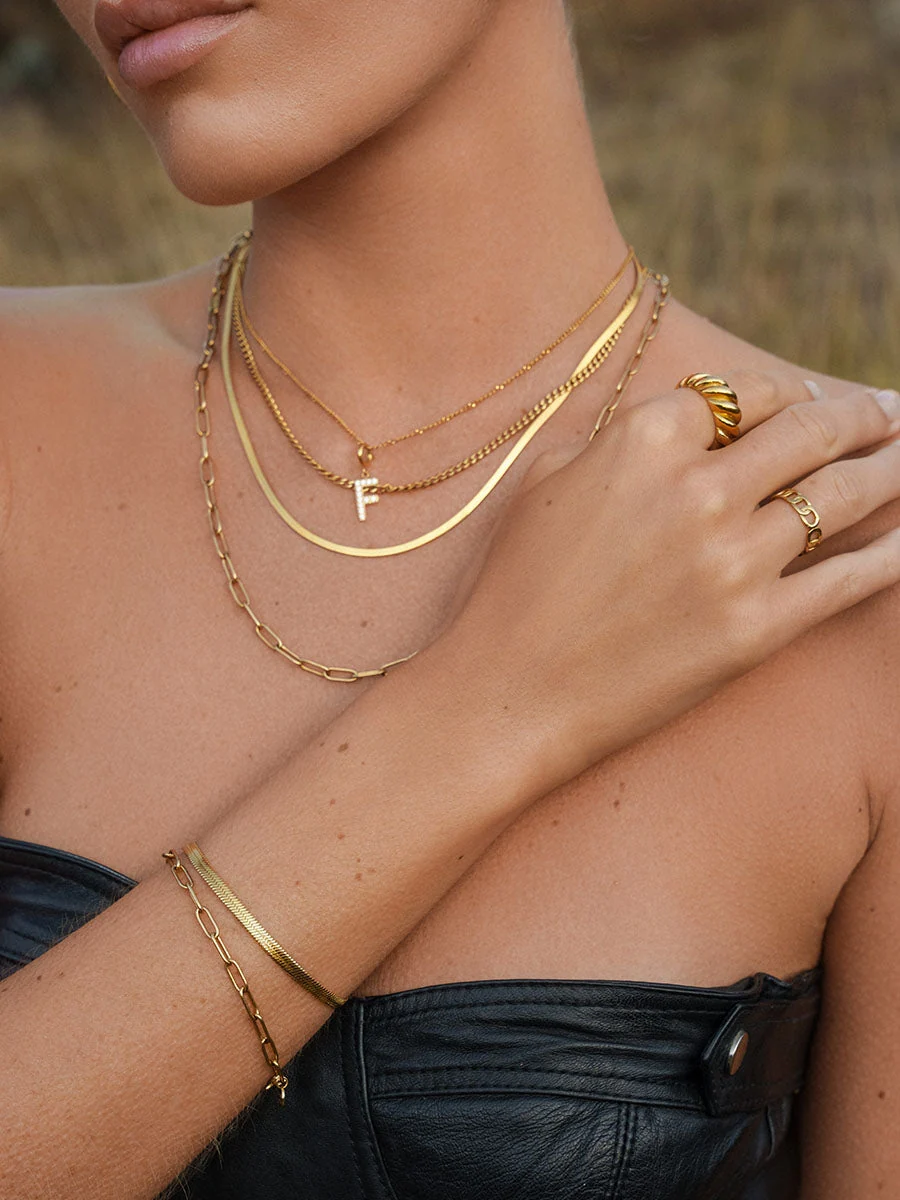
A flat chain catches light along one continuous ribbon, while an open link chain breaks it into smaller reflections. Begin with that difference in texture before adding length or decorative detail.
Let the neckline set the frame
Try the necklace with the clothes it will accompany before deciding where every layer should fall. A crew neck can frame a short chain above the fabric or support a longer arrangement over it. An open shirt creates a narrower space. Move naturally and look from the side as well as the front; a pleasing still photograph does not reveal whether a pendant keeps disappearing beneath a collar.
Compare lengths on your own body
Product names and photographs cannot establish where a chain will sit on you. A piece of soft string offers a simple way to compare possible lengths against your neckline. Leave enough separation for the individual outlines to remain legible, then judge the result while sitting and turning your shoulders, rather than relying on a fixed spacing rule.
Add contrast through texture
A smooth reflective chain and a finer link chain bring different textures to the same neckline. Add a familiar pendant if you want a small point of attention, keeping enough space around it. Begin with two necklaces, check their movement and introduce a third only if the individual outlines still feel clear.
Give every clasp room to work
Before leaving home, check that the necklaces close securely and that their clasps are not pulling against one another. If two chains repeatedly cross, adjust their lengths or simplify the arrangement. Our handling advice is to keep flat chains in relaxed curves and avoid sharp folds or tight knots. This is a practical precaution for the silhouette, rather than a claim about the exact construction or flexibility of this particular model.
End the day with the same care
Lay each necklace down separately after wearing so the next arrangement starts without a tangle. A soft cloth can lift everyday surface residue; follow the instructions for the exact material before using water or a cleaner. The best layer is one that remains comfortable, easy to wear and easy to put away.
Consider the details. Keep what feels like you.