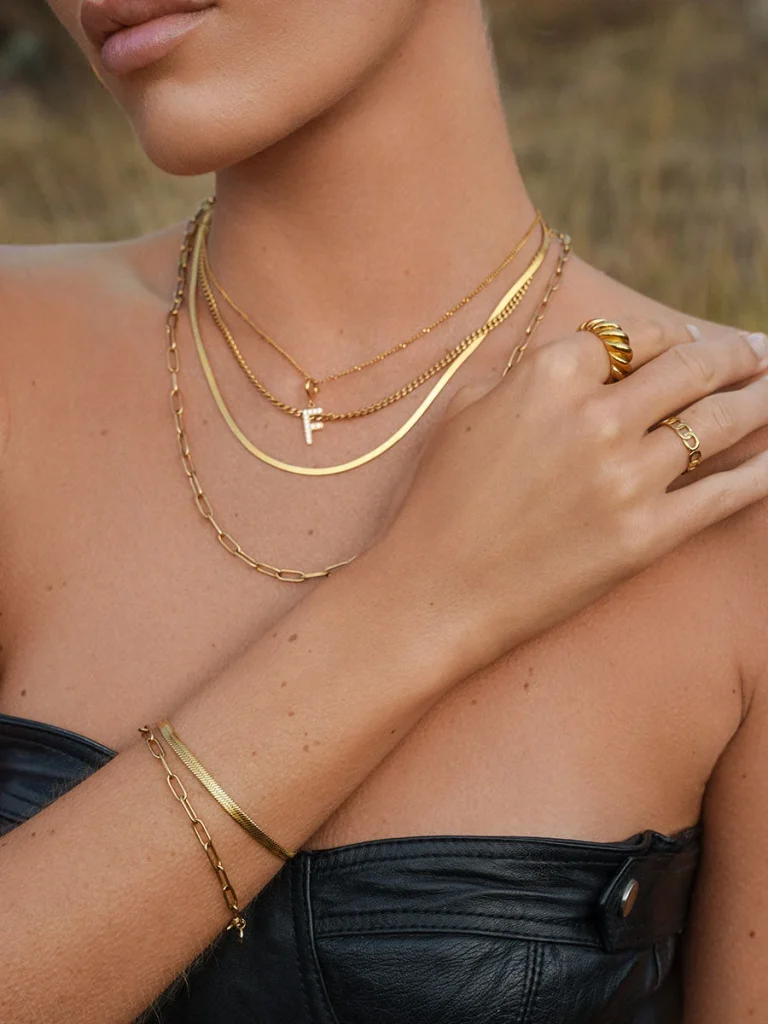
Start with the pieces you already reach for
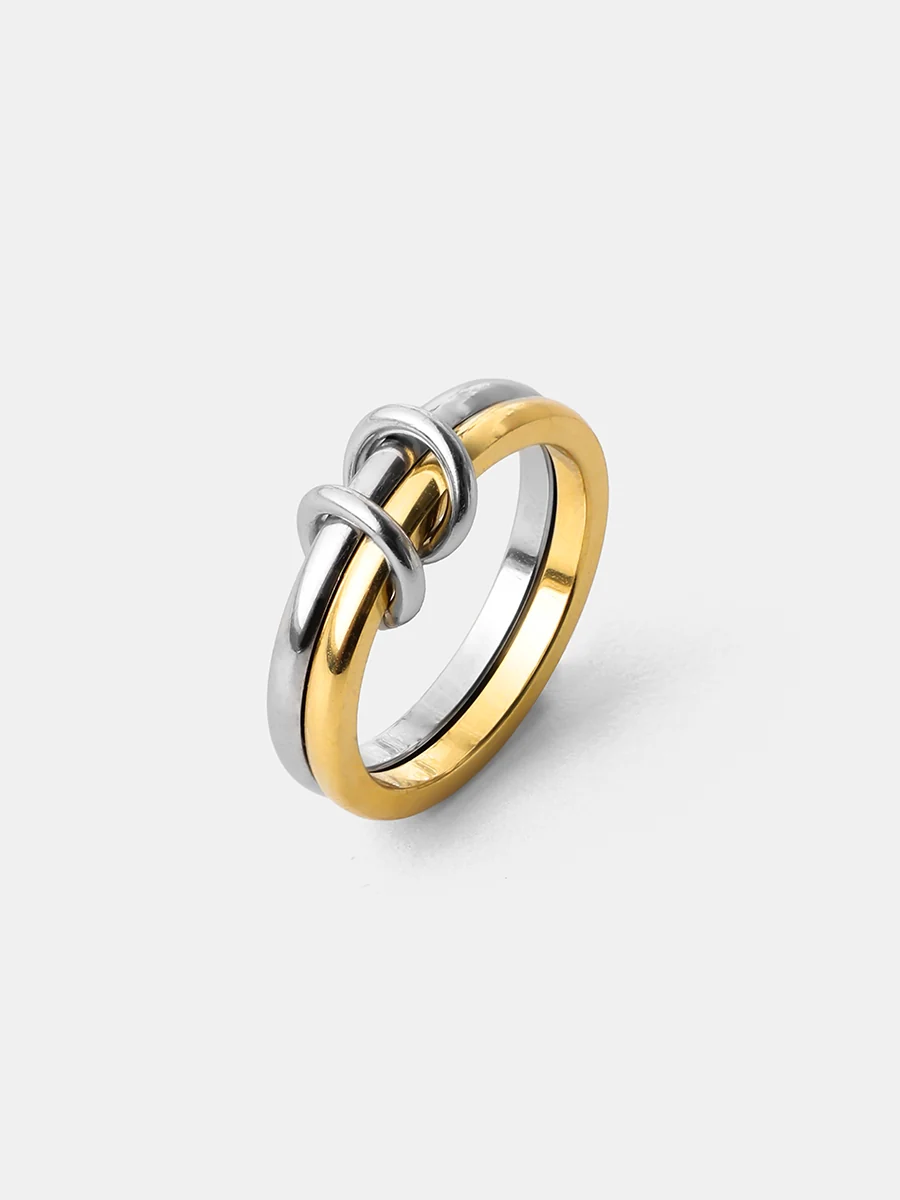
Warm and cool finishes can share the same hand when one simple detail ties them together. That might be a repeated curve, a polished surface or the small echo of a watch worn every day.
Choose a visual anchor
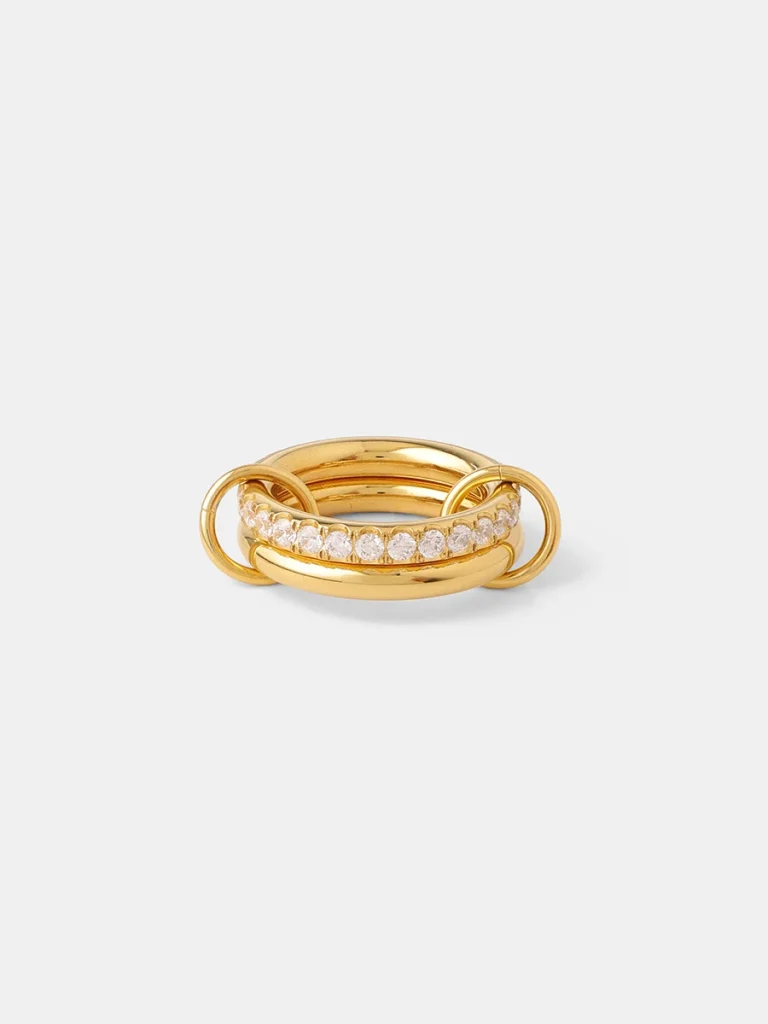
Our styling suggestion is to begin with one ring that has the most presence, whether through width, shape or contrast. Add a second piece only after seeing how the first sits on your hand. A dominant tone with a smaller accent often feels easy to read, but there is no required ratio. Look for a composition you enjoy from a normal viewing distance instead of trying to distribute every color equally across every finger.
Repeat one small cue elsewhere
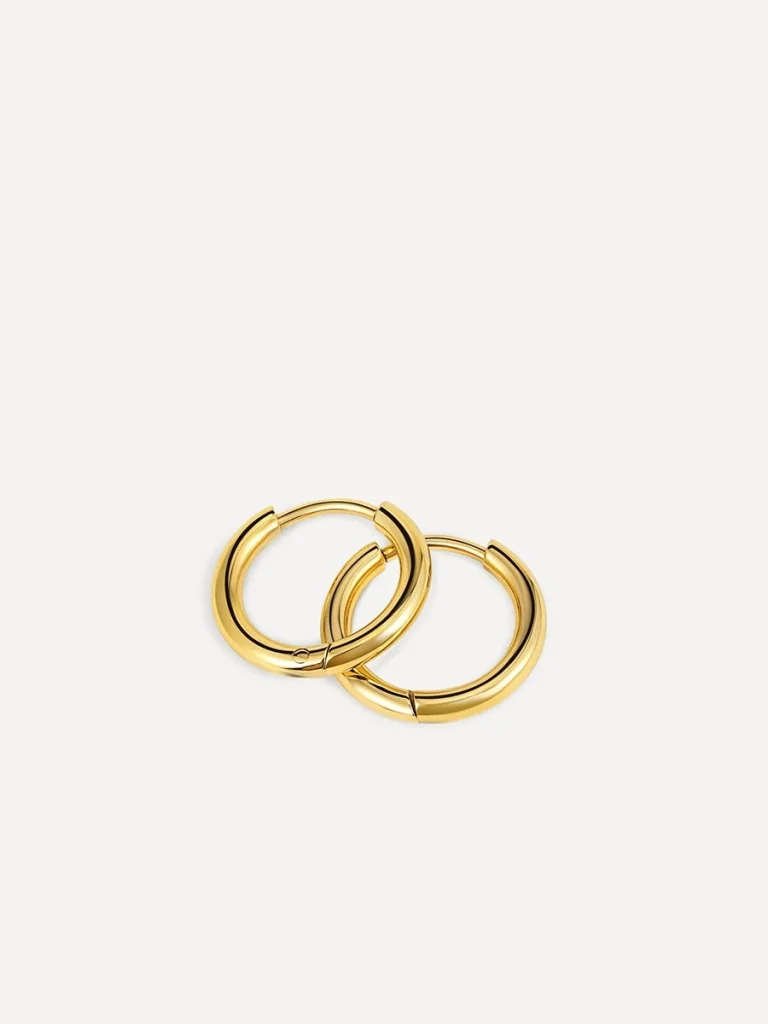
A second appearance of the accent tone can make a combination feel intentional. That might be a slim band on the other hand, a watch detail or a small hoop at the ear. The repetition does not need to be exact. You can also connect pieces through curved profiles or smooth surfaces, allowing shape to provide continuity when the colors differ. This is an editorial styling method, rather than a rule about matching jewelry.
Compare surfaces as well as colors
A highly polished ring and a textured ring can create more contrast than two different metal tones with the same finish. Lay the pieces beside one another in ordinary daylight and notice which difference attracts your eye first. Check their edges and raised details too: neighboring rings should not constantly catch or scrape. If a combination feels crowded, move one ring to another finger or let a single piece carry the idea.
Keep appearance separate from composition
Silver-colored does not necessarily mean sterling silver, just as gold-colored does not necessarily mean solid gold. Read the base metal and coating for each ring separately. Knowing what each piece actually contains also helps if you have sensitivities or need to decide how the rings should be cleaned.
Let fit and care settle the final choice
A visually balanced arrangement still needs room for ordinary movement. Store rings separately when raised details might rub. Mixing tones works best as a flexible habit: keep the combination that feels comfortable, and adjust it when the day’s clothes or activities change.
Consider the details. Keep what feels like you.